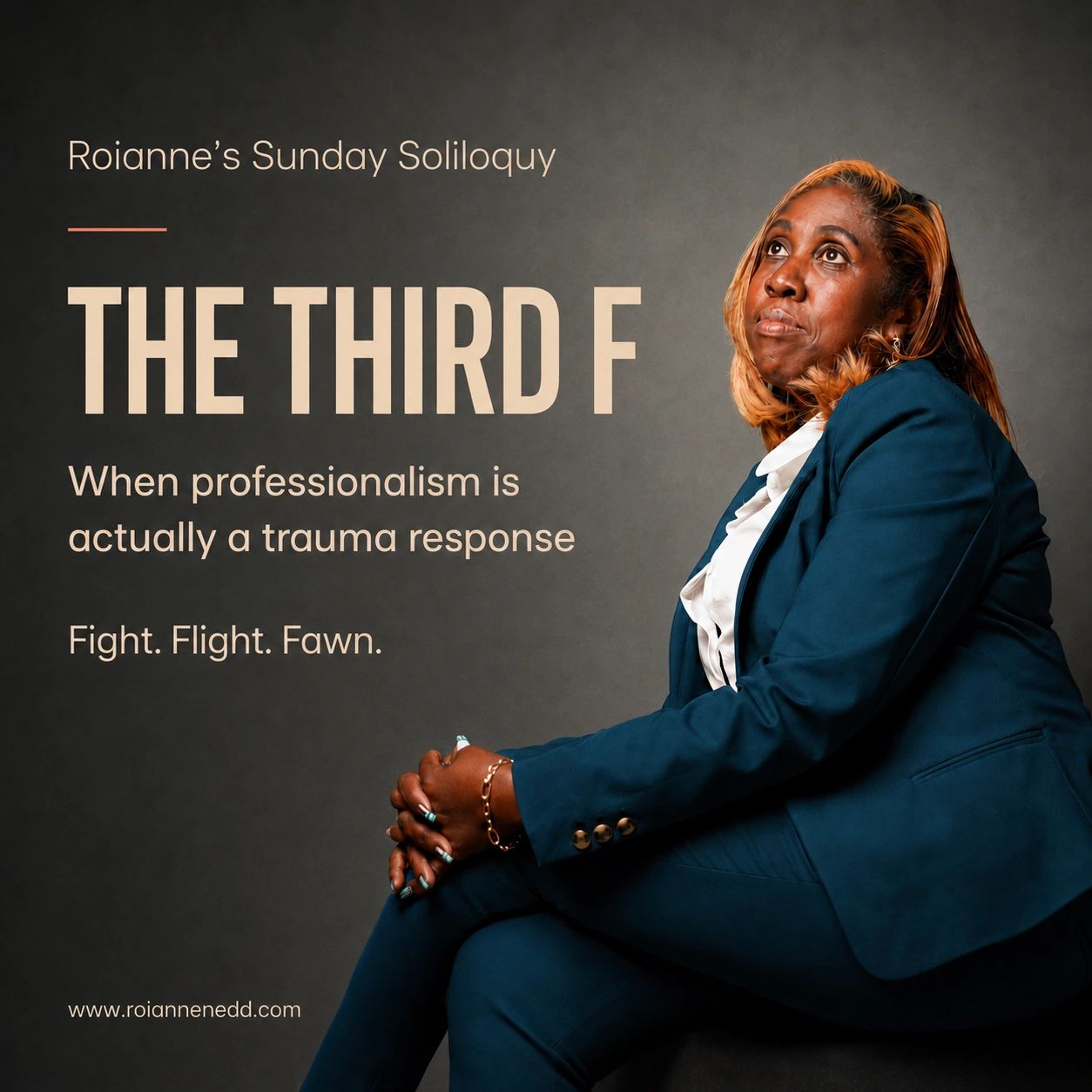
What if the behaviour we praise as “professionalism” is sometimes a trauma response?
Recently, I was reading a self-help book that explored our instinctive responses to fear. Most of us know about fight or flight. But it introduced a third response we discuss far less:fawn.
Fawning means appeasing the source of a threat to keep yourself safe.
Suddenly, so much of what I have witnessed in corporate environments made sense.
People facing bullying bosses or toxic cultures may not fight back or walk away. Instead, they work harder to fit in. They excuse unacceptable behaviour. They turn the other cheek until you wonder how many cheeks one person can possibly have.
Sometimes, they even become complicit in the very systems causing them harm.
Perhaps we don’t talk about fawning enough because it is an inconvenient truth.
Our silence protects the people and systems that benefit from it. Fawning keeps employees compliant, minimises disruption and allows harmful workplace cultures to continue unchallenged.
What looks like loyalty, professionalism or resilience may actually be someone trying to survive an environment that does not feel safe.
I wonder whether we are witnessing a form of collective fawning now, as budgets and commitments relating to inclusion, ethics, values, behaviour and culture are quietly reduced.
People placate.
People comply.
People stay silent because challenging the direction of travel feels unsafe.
But naming a trauma response can change everything.
When people recognise that an environment is causing them harm, they can stop blaming themselves. They can connect with others, challenge what has been normalised and begin building something better.
That connection matters because divide and conquer has enabled too many injustices. Marginalised groups are pitted against one another while profit takes precedence over genuine inclusion.
And genuine inclusion is difficult.
It requires us to understand perspectives different from our own. It asks leaders to expend real energy listening, learning and balancing competing needs. It demands courage, care and sustained effort—not simply slogans.
So, what do we do?
We create spaces where people can recover.
We place rest, resilience and wellbeing at the heart of change.
We connect through shared values instead of competing against one another.
And those of us with the influence to create new spaces and systems must choose to do so.
Because sometimes the bravest response is neither fighting nor fleeing.
It is recognising that you have been fawning—and deciding that you no longer have to disappear to survive.
Have you witnessed fawning in the workplace—or recognised it in yourself?