“To feel loss is a human trait. I wish I wasn’t human.”
Those are the words that I wrote to start the speech Iread at my father’s funeral.
He passed away in 2011, and I remember locking the grief in a box, shedding a handful of tears when I heard initially but largely just locking it away.
I didn’t get to see him before he passed. On 19 May, I received a call to say he had collapsed and was being transported to hospital. An almost hour long journey. The cause of his death remains somewhat unclear to me. Was it a stroke or a heart attack? Where I’m from, death certificates are by no means an accurate reflection of the truth. And spelling errors are common.
Yet, like any well-written narrative, his death was foreshadowed many times in my life, so maybe the numbness was to be expected. So many aspects of his death made no sense to me. I should have been prepared,and I always thought I’d know the moment he left this earth. I thought I’d feel a part of my soul evaporate that somehow, in a split second, I would become less than. But that isn’t what happened. Well, not straight away, anyway.
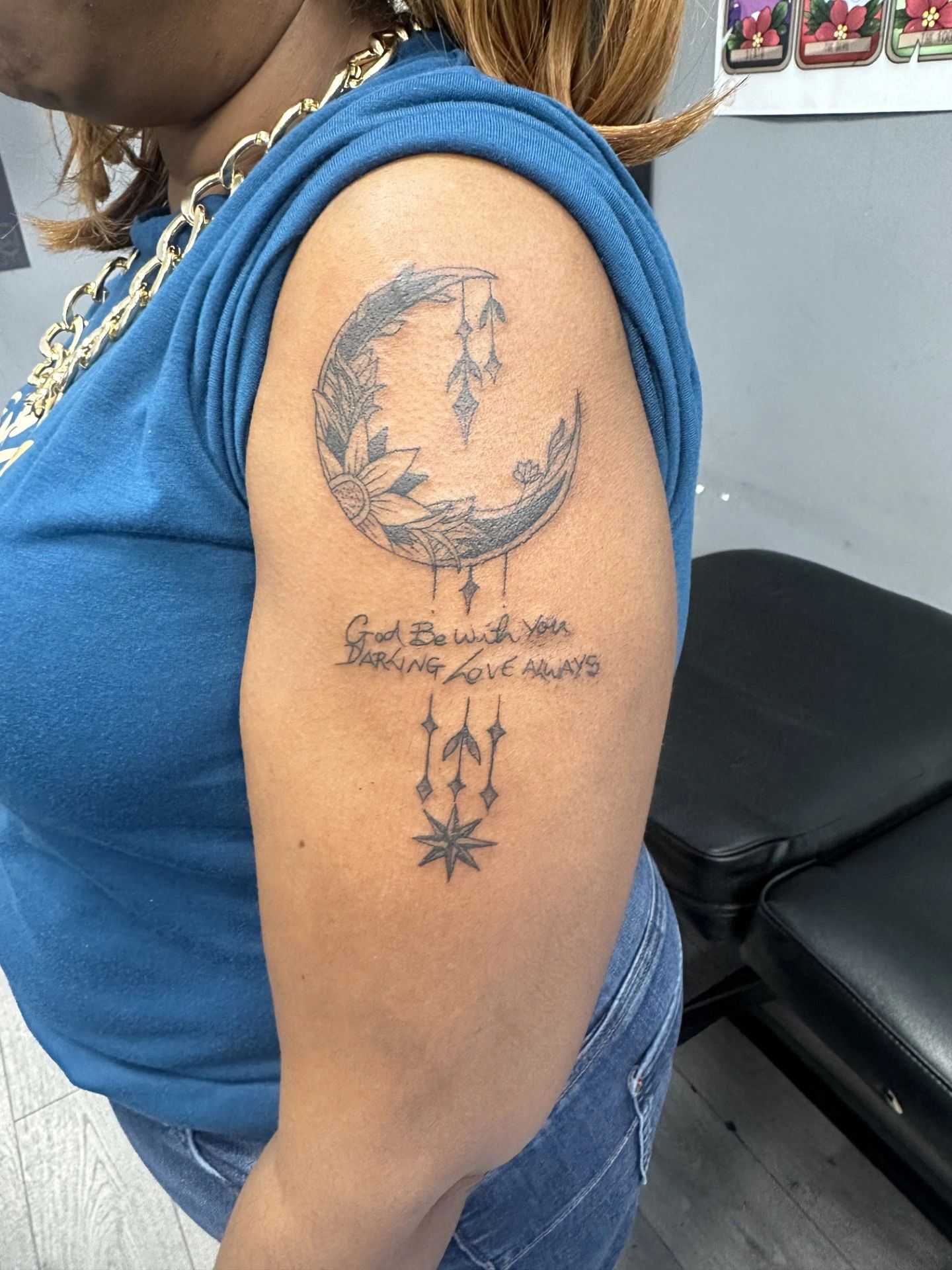
Even his final words, written to me in a note "God be With You Darling. Love Always" felt like a final unintentional goodbye. I now have them tattooed on my arm in his hand-writing and they bring me comfort as well as pain when i glimpse them in the mirror.
I was born when my dad was at the ripe old age of 45. Many of the men in our family had died by age 50, usually of cardiac arrest,and my dad was convinced that this would be his fate too. So, like any good parent, he prepared me for his death almost daily. He told me I probably had five years with him and that I should make the most of it.
Being born when he was considerably older meant that I got to see a side of him my siblings didn’t. He and I had a rare and somewhat odd relationship of mutual adoration, wonderment, competitiveness and curiosity. He wasn’t really my parent in some ways. He was my mentor,and I was his muse. On reflection, I think he spent lots of time testing me and my mind to see just how much he could influence and teach this tiny human being, and I thrived under his attention.
I loved him so much that I remember telling him that I wanted to die when he died. He laughed and told me I would have a full life to live after he was gone and chucked me under the chin which was his gruff way of showing affection. He wasn’t a very tactile person, and I guess for various reasons, I wasn’t a particularly tactile child,but I’d often steal a hug from him under protest.
He didn’t die at 50. I got many more precious years, and it’s been 13 years since he died,but this year has been by far the worst. Grief has engulfed me like a fire that threatens to destroy everything in its path.
I’ve struggled to get him off my mind, and the memories just keep coming. There were so many life changes and decisions I never got to discuss with him, so many conversations I didn’t have, and so many clarifications that I didn’t get to seek.
Even writing these words about grief engulfing me 13 years on feels self-indulgent. I feel as if I don’t have a right to this grief, and only people with recent bereavement should be allowed to ask for attention. But I am bereft. Maybe repeated losses have, over time, intensified this loss, or maybe it’s just the season for it, and there is no rhyme or reason.
I’m a fairly logical person, so this piece isn’t about self-indulgence. I’m trying to find sense and find a way to manage this in the future. Yet through trying to problem solve I realised three things.
1. My new job, Director of People Experience, requires me to look at the experiences people have at work, but thanks to societal shifts, I also have due regard for the fact that people are experiencing life all while trying to have a positive experience at work.
2. Work/life balance is much more than things like managing caring responsibilities and outside interests with working life. Right now, I’m trying to balance showing up at work as a colleague and maybe more importantly as an empathetic leader while dealing with emotions that feel bigger than my heart, mind and soul can contain.
3. Conversations at work around grief and support focus only on the NOW. There’s very little articulated messaging about long term grief and how to find ways to cope when an unexpected wave hits you.
But I’m a problem solver. Maybe I was born this way, or maybe he made me this way, and so I can’t just sit with my realisations. It’s time to find an answer to this.
It’s a simple fix really. Well,there are two things I think will help.
1. I’m going to talk about my grief and use my storytelling skills to remind people that it’s ok for all of us to grieve when it suits us and to accept grief as it comes instead of feeling as if there’s an expiration date.
2. In my role, I’m going to continue championing an individualised approach, creating opportunities for people to articulate what they need to be at their best and equipping leaders to have these empathetic conversations.
In closing, loss is a human trait, but so are empathy and resilience. Today, I commit to embracing and displaying both of these traits.
Do you?
Roianne Nedd is a multi-faceted HR leader specialising in corporate governance, ethics, intersectional feminism, organisational performance, and leadership effectiveness. Author of the Trusted Black Girl series of books focused on the experiences of Black women at work and the Cracked Cocoon series of self-help books, she is an accomplished speaker and sought after executive, career, and life coach.